
Frequently Asked Questions About Low-Voltage and Structured Wiring
Welcome to the Bridge Wiring FAQ page, where we address your most pressing questions about electrical wiring and system integration.
If you’ve ever faced challenges with wiring installations, repairs, or understanding electrical systems, you’re not alone. Many encounter confusion or uncertainty when working with wiring, but the good news is, we’re here to help.
Our FAQ section is designed to offer clear, practical solutions and expert guidance, so you can overcome any obstacles with confidence. Explore our answers and take the next step in mastering your wiring projects with ease.
Who is Bridge Wiring?
Hi, nice to meet you. We’re a low-voltage structured wiring company located in Columbus, Ohio and operating around central Ohio. We can handle network and A/V low-voltage wiring, providing the best structured cabling service around.
What's low-voltage wiring?
Low-voltage and structured wiring and cabling covers all network wiring and A/V connections. Low-voltage wires carry less than 50 volts of energy (compared to 220-230 volts and above for live wires).
What's structured wiring or cabling?
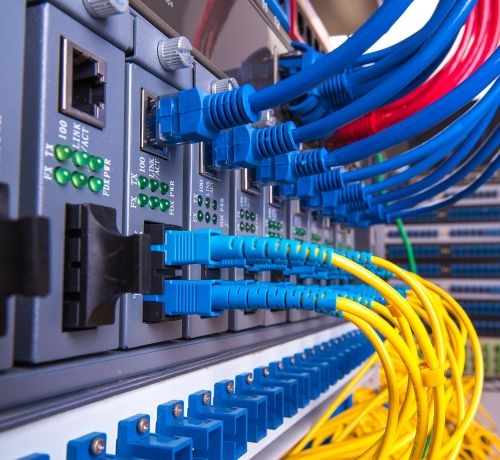
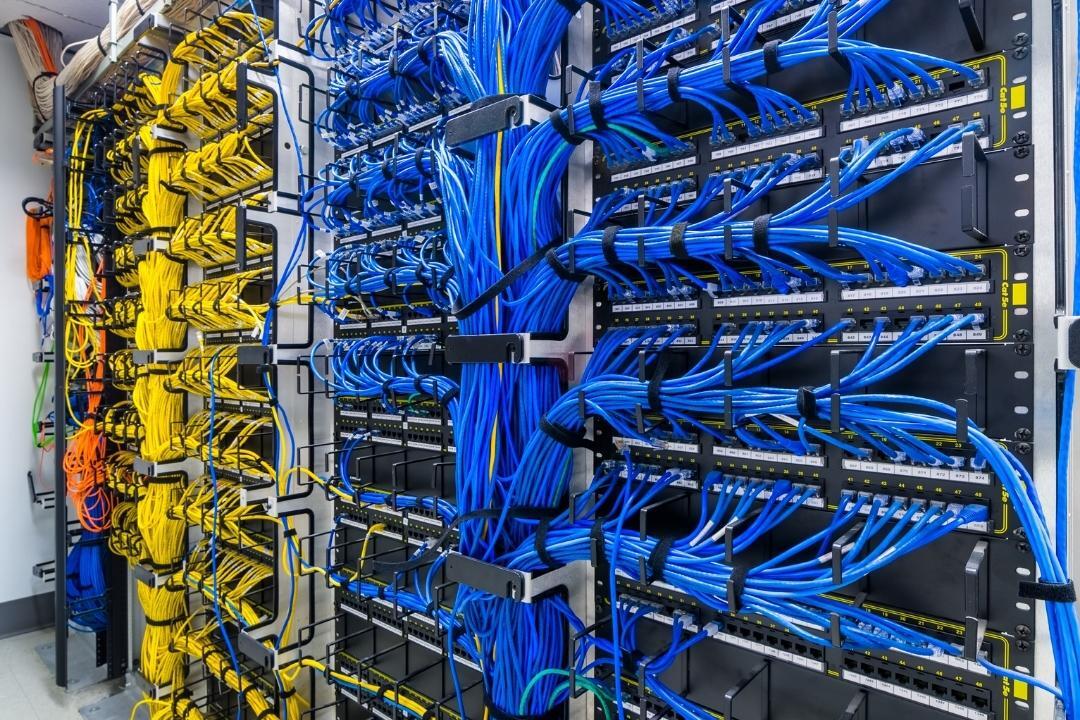
Structured wiring or cabling is where we make all the dozens of wires in an organized and labeled fashion, making maintenance and repairs far easier than a tangled mess of cables. We put an example right over there ➡
What services does Bridge Wiring provide?
We provide the structured cabling and wiring for all business needs and industries. We can wire…
-
- Office & commercial spaces
- Data centers
- Ethernet & fiber-opting wiring
- Computer & network systems
- Telephone & communication systems
- Check out our gallery here
How long does it take to get an assessment and quote?
An assessment depends on the size of the project site and scope of work. Once the assessment is complete, we can get a quote together within a few days, and get the project started, depending on schedule and equipment acquisition.
What’s the difference between Cat5e, Cat6, and Cat6A ethernet cables?
The main differences lie in their performance specifications, physical construction, and suitability for different networking environments.
Here’s a quick breakdown:
- Cat5e can send 1GB of data through 100 meters of cable (328 feet) before any loss of speed
- Cat6 can send 10GB through 55 meters (165 feet) of cable
- Cat6a can send 10GB through 100 meters of cable
What’s Single-mode (SMF) and Multi-mode fiber (MMF)?
The 2 types of fiber optic cables serve different purposes. SMF is physically smaller and affords long-distance data transfer. The high wavelength of SMF allows it to travel farther and bypass electronic and physical interference like home appliances and physical barriers (especially hard barriers like brick or concrete).
MMF allows for much faster data transfer speeds, but reduces its effective range. The low frequency wavelength inhibits the signal from traveling through aforementioned electronic or physical interference.
What types of structured cabling and low-voltage systems do you install?
We design and install complete commercial structured cabling systems, including Cat6 and Cat6a data drops, single-mode and multi-mode fiber-optic backbones, wireless access point (WAP) grids, VoIP phone lines, overhead paging/audio systems, and security/coaxial wiring.
Do you provide cleanup and organization services for messy server racks or data closets?
Yes. “Server room forensics” and closet cleanups are a core part of our modernization services. We trace out abandoned lines, re-terminate degraded connections, install proper horizontal and vertical cable managers, and neatly dress and label every patch cable to dramatically simplify your future IT troubleshooting.
How do you handle high-ceiling or large-scale warehouse wireless (WAP) installations?
We specialize in large-footprint industrial environments like warehouses and logistics centers. Our team utilizes specialized lift equipment to mount and wire ruggedized wireless access points at optimal heights, ensuring seamless coverage for inventory scanners, automation systems, and facility-wide fleet management.
Are hardwired or wireless connections better for conference and presentation rooms?
Both options have their pros and cons. Wireless setups offer better flexibility for setup and adding more devices, but with more devices and WiFi communication, wireless setups have multiple single points of failure with each device. Wired communications systems are more reliable than WiFi, but you’re limited with installation.
How do I get an assessment started?
We’re always here to help you. If you want to schedule an assessment or just have questions, click the big button below to get in touch. You can also call us at 614-588-8458.
Bridge Wiring Is Here for You
Need a reliable low-voltage sub-contractor for a commercial bid, or looking to map out a structured cabling layout for an office renovation? We design infrastructure that scales with your business. Contact the Bridge Wiring team today through our website or call us directly to discuss your project blueprints and scheduling needs.